

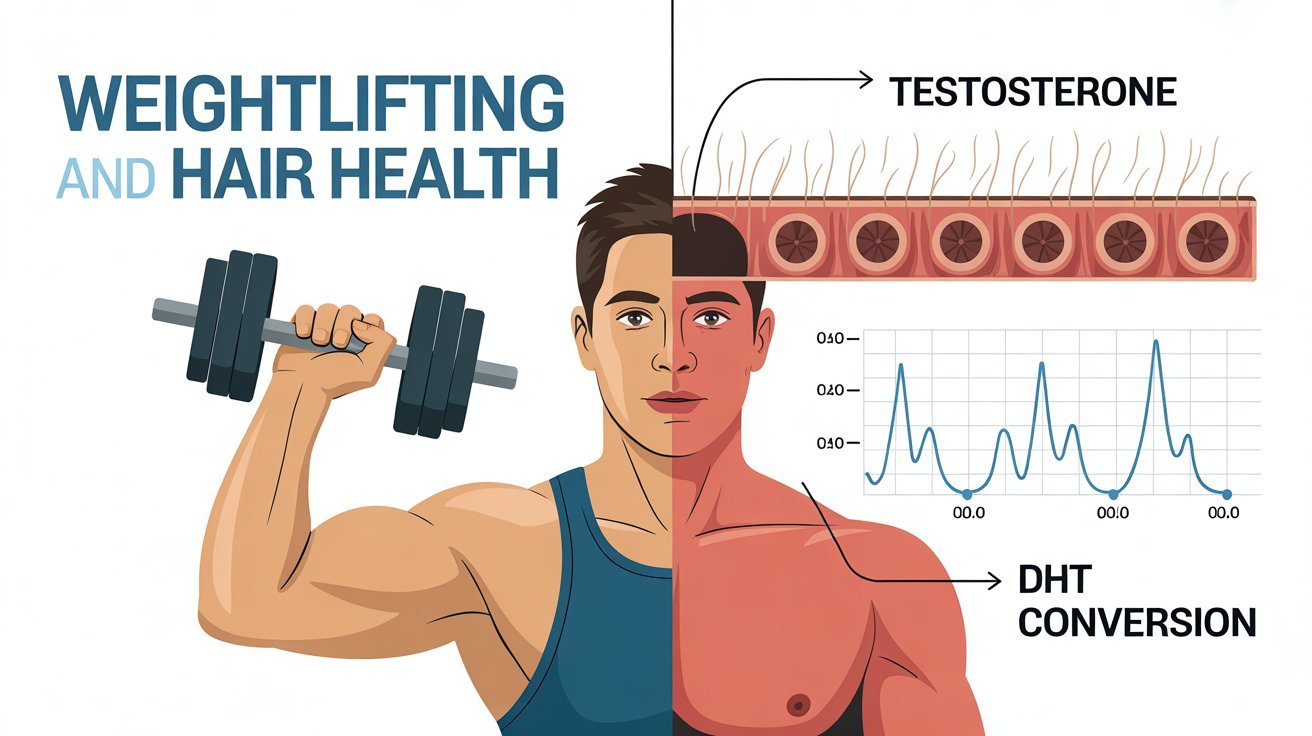
Does lifting weights cause hair loss? Many people worry about this when they start strength training or going to the gym. Some notice more hair shedding and think lifting is the cause. The truth is different. Genetics, hormones, diet, and stress influence hair loss. Exercise alone does not make hair fall out.
Testosterone and DHT affect male pattern baldness. Overtraining, poor recovery, or low nutrition can also affect hair health. Knowing how weight training and hair shedding are connected is essential. This guide will explain the facts, bust myths, and give tips to keep your hair strong and healthy while staying fit.
Understanding Hair Growth and Hair Loss
Hair loss can worry anyone. Many people blame lifting weights, but other factors usually cause hair shedding. To understand why hair falls out, we need to look at how hair grows and what affects its health. This helps separate myths from reality.
Hair grows in cycles. There are three main stages: anagen, catagen, and telogen. Anagen is the growth phase, which lasts several years. Catagen is a short transition phase. Telogen is the resting phase, when hair naturally falls out. Losing 50–100 hairs a day is normal. Hair follicles control these cycles. Genetics, hormones, and nutrition influence them.
Common Causes of Hair Loss
Hair loss happens for many reasons. Genetics is the most significant factor, especially in male pattern baldness. Hormones like testosterone and DHT can trigger thinning. Stress, poor nutrition, and illness also play a role. Even overtraining and high cortisol levels from excessive workouts can affect hair growth.
Hormones control hair follicle activity. Testosterone converts to DHT, which can shrink follicles in people genetically prone to hair loss. Women may also see hair thinning due to hormonal changes. Exercise slightly affects hormones, but regular lifting does not cause DHT spikes high enough to trigger hair loss in healthy adults.
Understanding these basics is key. Hair shedding is normal, and lifting weights alone is rarely the cause. Genetics, hormones, and lifestyle factors are the leading causes of hair loss.
Lifting Weights and Hormones
Many people worry that lifting weights can trigger hair loss due to hormonal changes. Exercise indeed affects hormones, but the connection to hair shedding is often misunderstood. Understanding how hormones react to strength training helps clear the confusion.
How Strength Training Affects Testosterone
Lifting weights can temporarily increase testosterone levels. This is a normal and healthy response. Testosterone helps build muscles, boost energy, and support overall fitness. For most people, the rise in testosterone is small and short-lived. It is not enough to cause hair loss on its own.
DHT and Hair Loss
Dihydrotestosterone (DHT) is a hormone linked to male pattern baldness. DHT can shrink hair follicles in genetically susceptible people. While testosterone can convert into DHT, regular weight training does not cause dangerous spikes. Only people with a genetic predisposition are affected.
Many gym-goers think lifting heavy weights increases DHT enough to cause hair thinning. Research shows this is not true for most healthy adults. Hair loss from lifting is sporadic. Overtraining, stress, and poor recovery have a bigger effect on hair health than regular strength training.
Other Exercise-Related Factors That May Affect Hair
Even though lifting weights alone rarely causes hair loss, some exercise-related factors can affect hair health. Things like stress, nutrition, recovery, and scalp care play an essential role. Understanding these helps prevent unnecessary shedding.
Too much exercise can raise cortisol, the stress hormone. High cortisol levels may push hair follicles into the resting phase, causing temporary hair shedding. This condition is called telogen effluvium. It is usually temporary and reverses with rest. Overtraining without proper recovery can also make hair thinning worse.
Nutrition and Recovery
Your diet affects hair growth more than your workout. Protein, iron, zinc, and vitamins are essential for strong hair. Skipping meals or consuming an unbalanced diet can weaken hair follicles. Recovery is just as important. Sleep and rest days allow the body to repair muscles and support healthy hair growth.
Excessive sweating from intense workouts can irritate the scalp if not cleaned properly. Sweat and dirt can clog hair follicles, causing mild shedding. Regular scalp washing and gentle hair care help keep hair healthy.
Who Is Most at Risk?
Not everyone who lifts weights experiences hair loss. Genetics, hormones, age, and gender influence hair shedding. Understanding who is most at risk helps set realistic expectations for anyone active in the gym.
Genetics is the most significant factor in hair loss. People with a family history of male or female pattern baldness are more likely to experience thinning. Even small hormonal changes can affect their hair more than they would in someone without a genetic predisposition.
Male vs Female Hair Loss Patterns
Men and women experience hair loss differently. Men often notice a receding hairline or thinning on the crown. Women usually see overall thinning, especially at the top of the scalp. Strength training affects both genders equally, but genetics determines how noticeable hair loss becomes.
Hair follicles change as we age. Testosterone and DHT levels can influence hair growth, especially in men. Women may notice thinning during menopause due to hormonal shifts. Even healthy adults with good nutrition and regular exercise can notice gradual hair loss if hormones or genetics make them prone.
Tips to Protect Hair While Lifting Weights
Even though lifting weights rarely causes hair loss, taking care of your hair can prevent unnecessary shedding. Small changes in your routine, nutrition, and recovery can make a big difference.
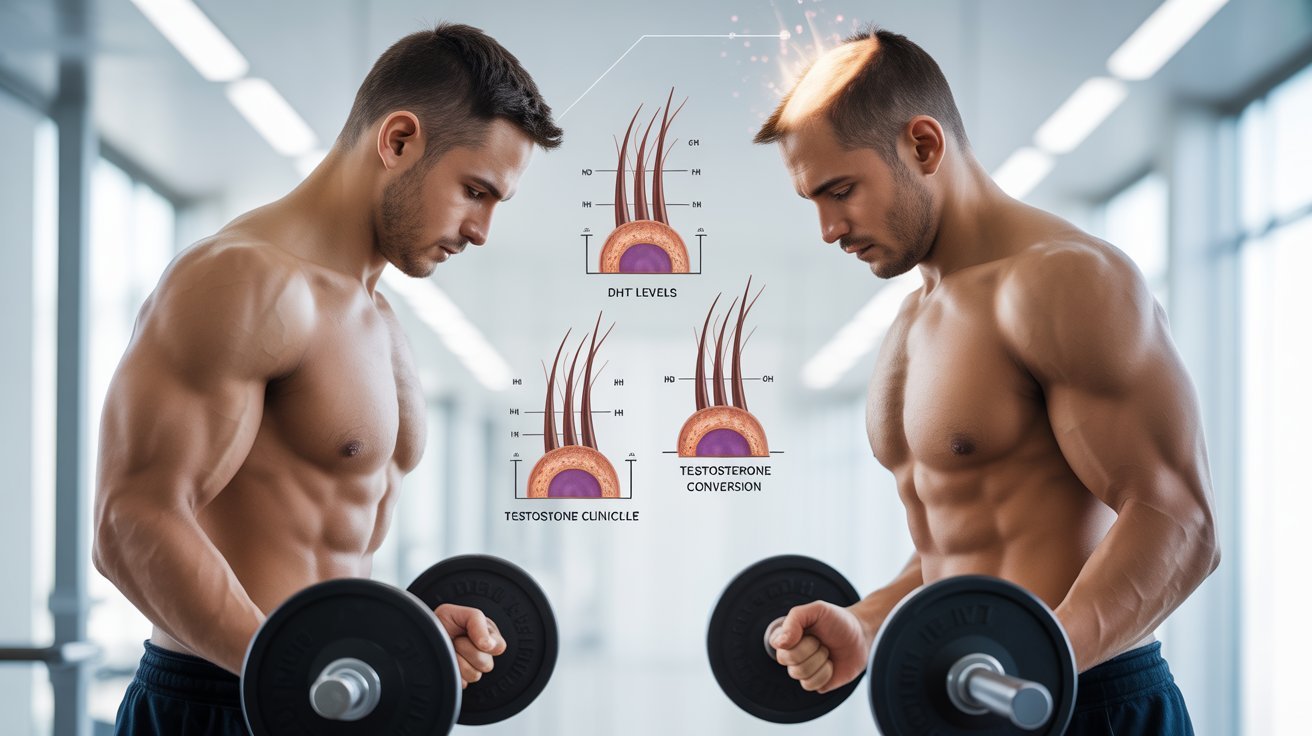
Avoid overtraining. Too much stress on your body can affect hair health. Include rest days and moderate workouts. This helps your body recover and keeps cortisol levels steady, both of which support healthy hair growth.
Nutrition for Hair Health
Protein, iron, zinc, and vitamins are essential for strong hair. Eating a balanced diet with lean meats, eggs, leafy greens, and nuts gives your follicles the nutrients they need. Supplements can help if your diet lacks specific nutrients.
Sweat, dirt, and oil from intense workouts can irritate the scalp. Wash your hair regularly with gentle shampoo. Massaging your scalp improves blood flow, which supports healthy follicles. Avoid tight hats or headbands that pull hair.
Stress Management
Sleep well and manage stress. Stress can push hair follicles into the resting phase, causing temporary shedding. Yoga, meditation, and relaxation after workouts support both mental health and hair health.
By following these tips, you can keep your hair strong and healthy while lifting weights. Protecting hair is about balance, not avoiding exercise.
When to See a Specialist
Most hair shedding from lifting weights or exercise is normal. But sometimes, hair loss may indicate a bigger problem. Knowing when to get professional help ensures you protect your hair and overall health.
See a specialist if you notice sudden or excessive hair shedding. Bald patches, rapid thinning, or changes in hair texture are signs that it may not be just normal shedding. Persistent hair loss that does not improve with rest, proper nutrition, or reduced stress also needs attention.
Consulting a Dermatologist or Trichologist
A dermatologist or trichologist can examine your scalp, check hormone levels, and identify underlying causes. They can recommend treatments, lifestyle changes, or supplements to support hair health. Professional guidance is invaluable if genetics, hormonal changes, or medical conditions are contributing to hair thinning.
Early intervention helps prevent more severe hair loss. Combining expert advice with a healthy lifestyle, balanced exercise, and proper scalp care helps keep your hair strong while you enjoy lifting weights.
Final Verdict: Does Lifting Weights Cause Hair Loss?
Lifting weights alone does not cause real hair loss. Many people worry about hair shedding after starting strength training, but it’s usually due to genetics, hormones, stress, or nutrition, not the exercise itself. Temporary shedding can happen from overtraining or poor recovery, but it is rare.
Weight training can slightly raise testosterone, which may convert to DHT. However, this is only a concern for people who are genetically prone to male-pattern baldness. For most healthy adults, regular lifting does not trigger hair loss.
Hot tips to protect hair include eating a balanced diet, managing stress, taking rest days, and caring for your scalp. These habits support healthy follicles and reduce unnecessary shedding.
In short, lifting weights is safe for hair. Focus on proper workouts, nutrition, and recovery. Genetics and hormones are the main drivers of hair loss. Using these tips ensures you can stay fit while keeping your hair strong and healthy.
FAQs
Can lifting weights increase hair loss?
No. Regular strength training does not directly cause hair loss. Genetics, hormones, stress, and nutrition mainly influence hair shedding. Overtraining or poor recovery may have a minor effect.
Does testosterone from lifting weights cause hair thinning?
Lifting weights can slightly raise testosterone. In most healthy adults, this does not increase hair loss. Only people genetically predisposed to male-pattern baldness may notice a difference.
Can protein shakes or supplements cause hair loss?
Protein shakes alone do not cause hair loss. Poor nutrition or deficiencies can affect hair health, so choose balanced supplements and a nutrient-rich diet.
How can I protect my hair while exercising?
Eat a balanced diet, manage stress, get enough rest, and keep your scalp clean. Gentle scalp massages and avoiding tight headgear also help maintain healthy hair follicles.
When should I see a doctor about hair loss?
See a dermatologist or trichologist if you notice sudden, excessive shedding, bald patches, or rapid thinning. Early consultation helps identify causes and prevent worsening.
