

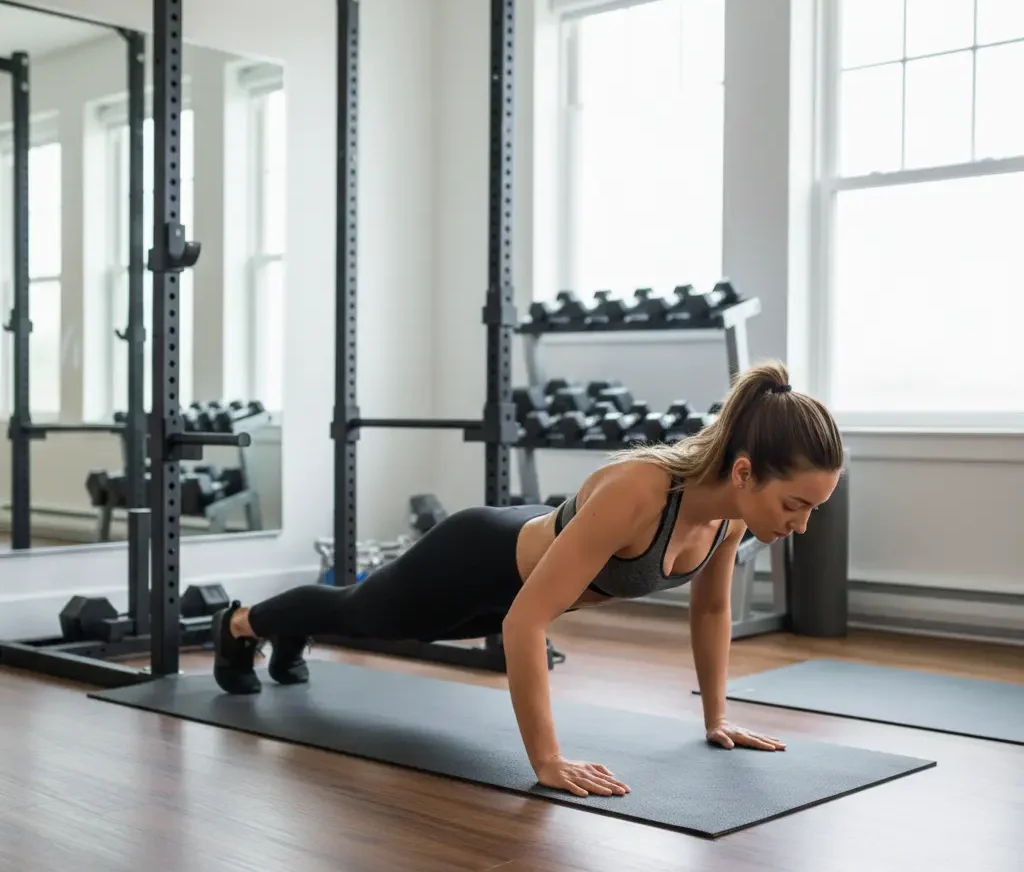
Building muscle at home with no equipment is easier than many people think. You don’t need a gym or fancy machines to gain strength and tone your body. Bodyweight exercises like push-ups, squats, planks, and dips can effectively target your chest, arms, legs, glutes, and core.
With consistent practice, these no-equipment workouts improve endurance, functional fitness, and overall strength. By combining upper-body, lower-body, and core exercises into a full-body home routine, you can build muscle safely and efficiently.
Pairing these exercises with proper nutrition, hydration, and rest ensures faster results. Learning the right techniques and sticking to a consistent plan make building muscle at home practical, effective, and sustainable.
Key Bodyweight Exercises to Build Muscle
Building muscle at home with no equipment is all about using your own body weight effectively. You can strengthen your chest, arms, legs, glutes, and core without machines or dumbbells. Bodyweight exercises are versatile and can be adapted for beginners and advanced levels. They improve functional fitness, endurance, and overall strength while keeping workouts simple and accessible.
Push-Ups for Chest, Arms, and Core
Push-ups are excellent for building upper-body strength. They target the chest, shoulders, triceps, and core muscles. Beginners can start on their knees or against a wall, while advanced exercisers can try variations like diamond push-ups or decline push-ups. Push-ups help improve posture and support other bodyweight exercises.
Squats and Lunges for Legs and Glutes
Squats and lunges strengthen the quads, hamstrings, glutes, and calves. They also engage your core for stability. Proper form is key: keep your chest up, back straight, and knees aligned with your toes. Adding single-leg variations or pulses increases intensity and challenges balance.
Planks for Core Strength and Stability
Planks engage your abs, lower back, and glutes. They improve core stability, which supports all other exercises and daily movements. Beginners can start with 20–30 seconds and gradually increase hold time. Side planks or plank shoulder taps can add variety and challenge.
Dips and Pull Variations
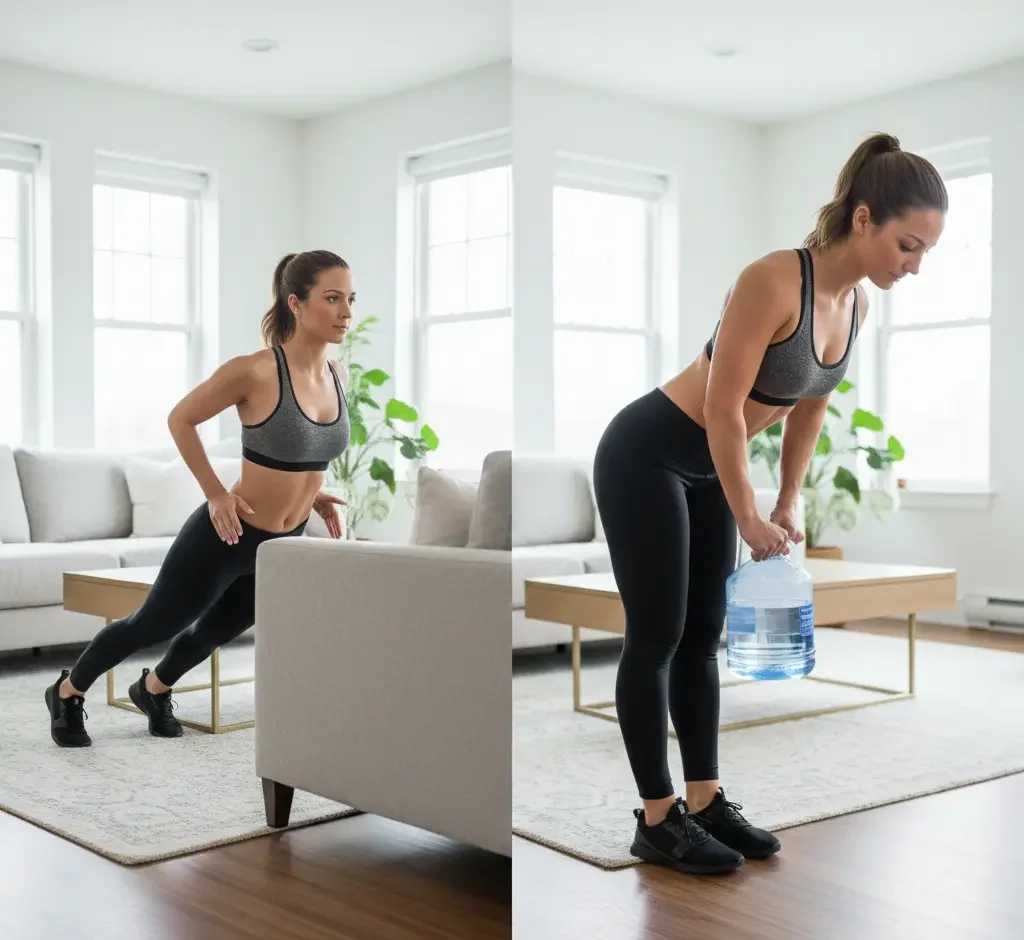
Using chairs, counters, or household items, you can do dips for triceps and rows for upper back strength. These exercises strengthen the arms and improve posture without equipment.
Combining these bodyweight exercises creates a full-body home workout. Practicing them regularly builds muscle, improves functional fitness, and keeps your routine simple, effective, and equipment-free.
Designing a Muscle-Building Home Routine
Creating a home workout routine without equipment is all about balance and consistency. The goal is to target all major muscle groups, upper body, lower body, and core, while allowing enough rest for recovery. A well-structured routine ensures steady muscle growth, prevents overtraining, and keeps workouts effective and enjoyable.
Frequency and Sets for Beginners and Advanced
For beginners, start with 3 days per week, performing 2–3 sets of each exercise. For example, do 10–15 push-ups, 12–20 squats, and hold planks for 20–30 seconds. Intermediate or advanced exercisers can increase to 4–5 days per week, with more repetitions, longer plank holds, and added variations to challenge muscles.
Combining Upper, Lower, and Core Workouts
A simple approach is to alternate exercises: start with push-ups and dips for the upper body, then squats and lunges for legs, and finish with planks for the core. You can mix exercises in circuits to boost endurance or perform them individually for focused strength.
Rest and Recovery Tips
Rest is essential for muscle growth. Allow at least 24–48 hours before working the same muscle group again. Stretching after workouts and getting proper sleep helps prevent injury and speed recovery.
By designing a balanced routine and staying consistent, you can build muscle at home effectively without any equipment, improve functional fitness, and strengthen your whole body.
Nutrition and Lifestyle Tips to Maximize Gains
Building muscle at home with no equipment isn’t just about exercises. Nutrition and lifestyle play a big role in helping your muscles grow and recover. Eating the right foods, staying hydrated, and getting enough rest all support your body’s ability to gain strength and tone muscles effectively.
Protein and Balanced Meals
Protein is essential for muscle repair and growth. Include foods like eggs, chicken, fish, beans, or dairy in your daily meals. Pair protein with complex carbs like oats, rice, or whole grains for energy, and healthy fats from nuts, seeds, and avocados to support overall health. Eating balanced meals throughout the day helps your body recover from bodyweight exercises.
Hydration and Recovery
Water is crucial during workouts. Staying hydrated prevents fatigue, supports metabolism, and helps muscles recover faster. After training, allow your muscles to rest. Sleep for 7–9 hours a night, stretch after workouts, and avoid overtraining to prevent injury and maximize gains.
Tracking Progress and Staying Consistent
Track your workouts, repetitions, and improvements to stay motivated. Gradually increase intensity by adding more reps, extending plank holds, or trying advanced variations of push-ups and squats. Consistency over weeks and months ensures visible muscle growth and improved strength.
By combining proper nutrition, hydration, rest, and regular exercise, you can build muscle effectively at home, even without any equipment.
Conclusion
Building muscle at home with no equipment is completely achievable with consistency, proper form, and balanced nutrition. Using bodyweight exercises like push-ups, squats, planks, dips, and pull variations, you can target every major muscle group and develop strength, endurance, and core stability.
Consistency is the most important factor. Doing these exercises regularly, challenging yourself with variations, and gradually increasing repetitions helps muscles grow. Pairing workouts with protein-rich meals, proper hydration, and enough rest ensures faster recovery and better results. Avoiding common mistakes like overtraining, poor form, or neglecting nutrition keeps your routine safe and effective.
Starting small and building a simple, structured home routine makes muscle growth practical and sustainable. With patience and dedication, you can improve your full-body strength, tone your muscles, and maintain overall fitness, all without stepping into a gym or using any equipment.
