

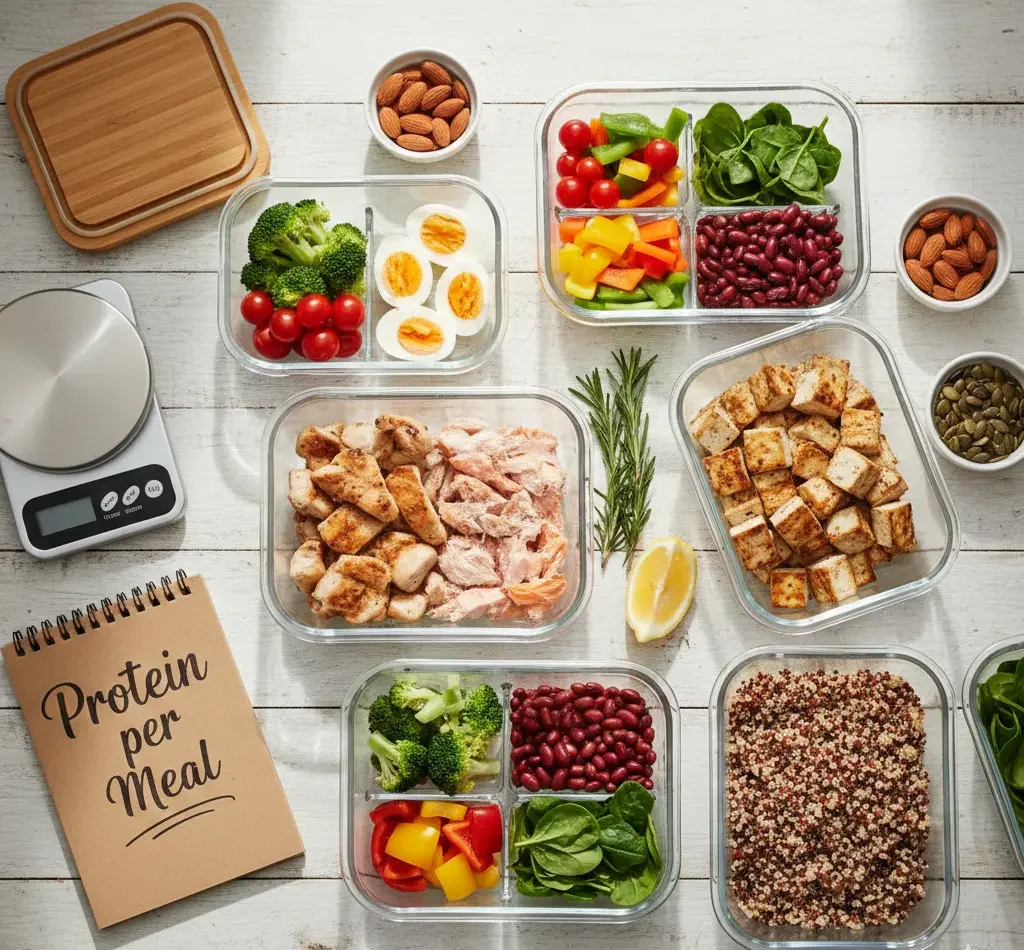
How much protein do you need to build lean muscle? Most active adults need about 0.7 to 1 gram of protein per pound of body weight each day. That equals about 1.6 to 2.2 grams per kilogram. This range helps muscle growth and muscle repair.
Protein is key to lean muscle mass. After strength training or resistance training, your body uses amino acids to fix tiny muscle tears. This process is called muscle protein synthesis. It helps you build new muscle mass. If your daily protein intake is too low, muscle recovery slows. Your progress can stall. The right protein intake per body weight, along with a balanced diet and the right calorie intake, helps improve body composition and supports muscle gain without excess fat.
Why Protein Matters for Lean Muscle Growth
Protein is the building block of muscle mass. Your body cannot build lean muscle without it. Every time you do strength training or resistance training, you create tiny muscle tears. Your body then repairs those tears. That repair process makes your muscles stronger and bigger over time.
What Proteins DoInside Your Body
Protein is made of amino acids. These amino acids help repair muscle tissue after workouts. This repair process supports muscle growth and improves muscle recovery. Without enough daily protein intake, your body cannot rebuild muscle well.
Muscle protein synthesis is the process that turns protein into new muscle mass. This process increases after weight training. It stays active for many hours. If you do not consume enough protein, muscle protein synthesis slows. That means slower muscle gain.
Protein also helps protect lean muscle mass during a calorie deficit. If you are trying to lose fat, higher protein intake helps maintain muscle. This improves body composition. You lose fat but keep muscle.
Why Resistance Training and Protein Work Together
Resistance training sends the signal for muscle growth. Protein provides the raw material. Both are needed for progress. Progressive overload, which means slowly increasing weight or reps, makes muscles adapt. With proper protein intake per body weight, your body can repair and grow stronger.
If you train hard but eat low protein, muscle recovery suffers. If you eat enough protein but do not train, muscle growth will be limited. Strength training and a balanced diet must work together for steady gains in muscle mass.
How Much Protein Do You Need to Build Lean Muscle?
Protein needs vary from person to person. Your body weight, training level, and goal all matter. Most research shows that 0.7 to 1 gram of protein per pound of body weight works well for muscle growth. That equals about 1.6 to 2.2 grams per kilogram. This range supports muscle protein synthesis and steady muscle mass gains.
Daily Protein Intake Based on Body Weight
A simple way to set your daily protein intake is to use your body weight. If you weigh 150 pounds, aim for about 105 to 150 grams of protein per day. If you weigh 180 pounds, aim for 125 to 180 grams per day. This protein intake per pound helps support muscle repair and muscle recovery after resistance training.
Beginners may see results at the lower end of the range. More advanced lifters often benefit from the higher end. Athletes who train hard or often may also need more protein.
Does Age or Goal Change Protein Needs?
Yes. Older adults may need slightly more protein to maintain lean muscle mass. During a calorie deficit, higher protein helps protect muscle and improve body composition. During a calorie surplus, protein still matters, but total calories also support muscle gain.
The key is consistency. A steady, high-protein diet, paired with strength training and progressive overload, gives your body what it needs to build lean muscle without excess fat gain.
Protein Per Meal: How Much Is Ideal?
Daily protein intake matters. Yet protein per meal also plays a big role in muscle growth. Your body cannot use unlimited protein at once. It works best with steady amounts spread across the day. This helps keep muscle protein synthesis active and supports muscle recovery after resistance training.
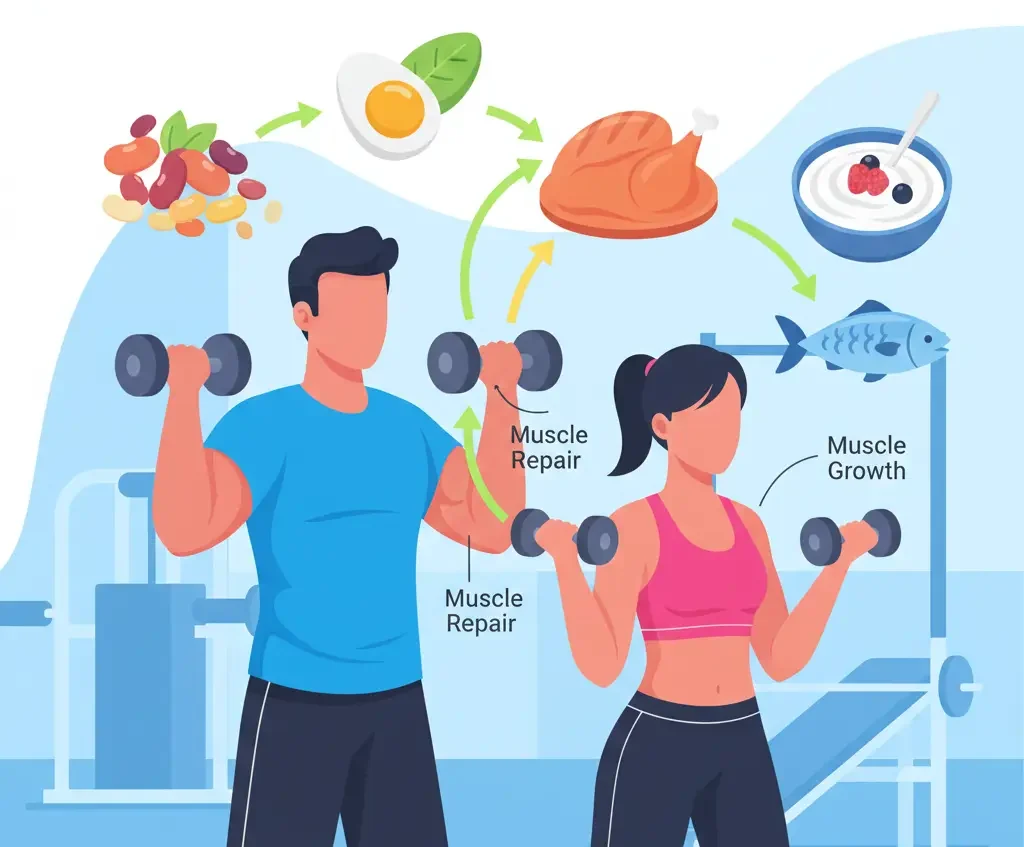
How Much Protein Per Meal Supports Muscle Growth?
Most people do well with 20 to 40 grams of protein per meal. A simple guide is about 0.25 to 0.4 grams per kilogram of body weight per meal. For a 75 kg person, that means around 20-30 grams per meal. Larger people may need closer to 35-40 grams.
This amount gives your body enough amino acids to support muscle repair. It also helps maintain lean muscle mass during fat loss. Very large single doses do not give extra muscle gain. Spreading protein evenly works better.
Why Spreading Protein Across the Day Helps
Eating protein every 3 to 4 hours keeps muscle protein synthesis active. This steady pattern supports better body composition over time. It also improves muscle recovery between workouts.
For example, you might eat protein at breakfast, lunch, dinner, and one snack. Each meal should include high-protein foods such as eggs, chicken, fish, Greek yogurt, or plant-based protein sources. This balanced approach supports muscle mass without excess fat gain.
What Happens If You Eat Too Little Protein?
Protein is not optional for muscle growth. Your body needs enough protein each day to repair and build muscle. If protein intake is too low, progress slows. You may train hard with resistance training, yet results will not match your effort.
Slower Muscle Growth and Poor Recovery
Low protein intake reduces muscle protein synthesis. Your body does not get enough amino acids to repair muscle tissue. Muscle recovery takes longer. You may feel sore for more days after strength training.
Over time, muscle growth slows down. You may even lose lean muscle mass, especially during a calorie deficit. This hurts body composition. Fat loss may happen, yet muscle mass may drop as well.
Increased Risk of Muscle Loss
During fat-loss phases, higher protein intake helps protect muscle mass. If protein is too low, your body may break down muscle for energy. This is more common with a large calorie deficit.
Athletes and active adults need enough protein per body weight to support training. A high-protein diet does not mean excessive protein intake. It means enough to match your activity level. Without proper protein intake, muscle gain becomes harder, and strength progress may stall.
Best Protein Sources for Lean Muscle
Not all proteins are the same. Choosing high-quality protein helps your body repair muscle and build lean muscle mass efficiently. Protein sources can be animal-based or plant-based. Both can support muscle growth when eaten in the right amounts.
High-Quality Animal Protein Sources
Animal proteins contain all essential amino acids. This makes them “complete proteins,” ideal for muscle protein synthesis. Common options include chicken, turkey, eggs, fish, lean beef, and dairy products like Greek yogurt or cottage cheese. Whey protein powders are also a fast, convenient option after workouts.
Plant-Based Protein Options
Plant proteins can also support muscle growth. Beans, lentils, chickpeas, tofu, tempeh, and quinoa are good sources. Combining different plant proteins throughout the day ensures you get all essential amino acids. Pea protein or soy protein powders are also effective for muscle repair.
Whole Foods vs Protein Powders
Whole foods provide protein and other nutrients, such as vitamins, minerals, and fiber. Protein powders are convenient for meeting daily protein goals, especially post-workout or when short on time. Ideally, a mix of whole foods and powders gives the best balance for building lean muscle.
Choosing the right protein sources, paired with proper daily intake and resistance training, helps you gain muscle, recover faster, and maintain a strong, lean body.
Timing: When Should You Eat Protein?
Eating protein at the right times can help your muscles recover and grow. Protein timing is not about eating more; it’s about giving your body amino acids when it needs them most. This supports muscle protein synthesis and improves recovery after strength training.
Pre-Workout Protein
Eating protein before a workout gives your body amino acids during exercise. A small protein-rich snack, like Greek yogurt or a protein shake, 30–60 minutes before training, can help reduce muscle breakdown and prepare your body for repair.
Post-Workout Protein
After resistance training, your muscles need protein to recover. Aim for 20–40 grams of high-quality protein within two hours after your workout. This window supports muscle repair, boosts muscle protein synthesis, and helps you gain lean muscle mass faster.
Protein Before Bed
Eating protein before sleep can help your muscles recover overnight. Slow-digesting protein, like casein or cottage cheese, releases amino acids slowly. This keeps muscle protein synthesis active while you rest.
Spreading protein across meals and snacks throughout the day ensures your muscles have a steady supply of nutrients. This combination of proper timing, daily intake, and strength training helps you build lean muscle efficiently without adding extra fat.
Sample High-Protein Meal Plan for Lean Muscle
Eating the right amount of protein each day is easier with a simple meal plan. A well-structured plan spreads protein across meals and snacks. This supports muscle repair, muscle growth, and steady lean muscle gain.
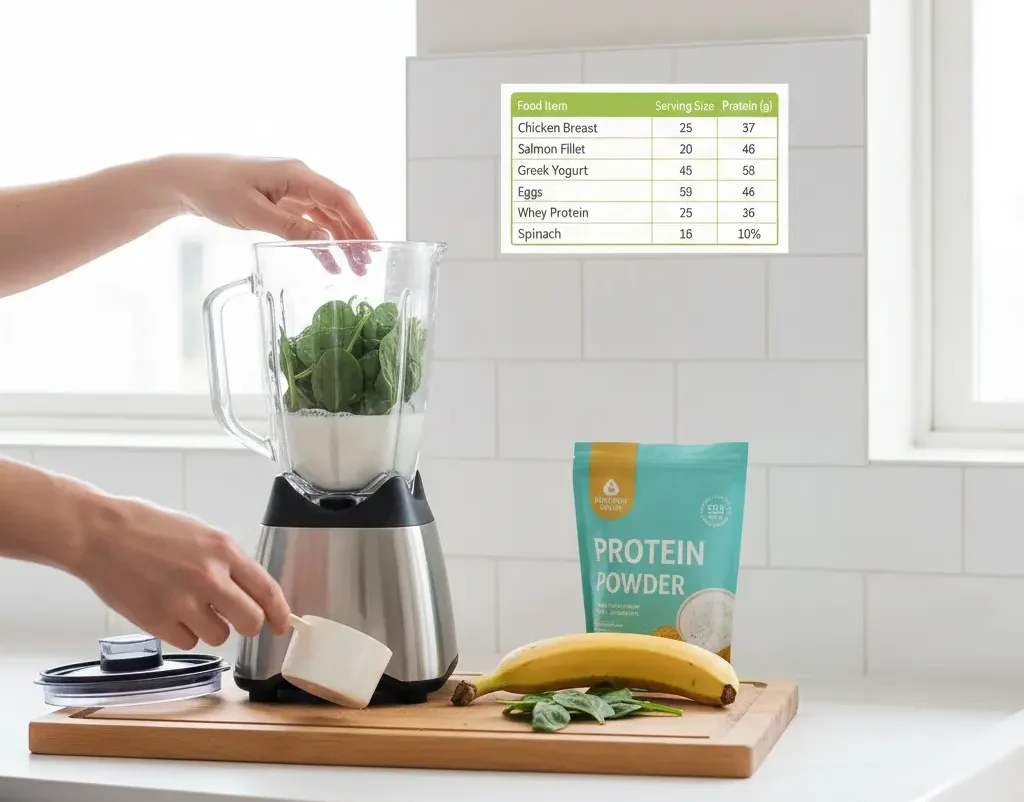
Example for a 150-Pound Person
- Breakfast: 3 eggs + 1 cup Greek yogurt + berries (25–30g protein)
- Snack: Protein shake or handful of almonds (20g protein)
- Lunch: Grilled chicken breast + quinoa + vegetables (30–35g protein)
- Snack: Cottage cheese or hummus with whole-grain crackers (15–20g protein)
- Dinner: Salmon or lean beef + brown rice + vegetables (35–40g protein)
Example for a 180-Pound Person
- Breakfast: 4 eggs + 1 cup Greek yogurt + oatmeal (30–35g protein)
- Snack: Protein shake + banana (25g protein)
- Lunch: Turkey breast or chicken + sweet potato + vegetables (35g protein)
- Snack: Greek yogurt + nuts (20g protein)
- Dinner: Lean beef, fish, or tofu + rice + vegetables (40g protein)
Easy High-Protein Snack Ideas
- Boiled eggs
- Protein bars
- Cottage cheese with fruit
- Nut butter on whole-grain toast
- Edamame or roasted chickpeas
A daily meal plan with evenly spaced protein helps keep muscle protein synthesis active. Paired with resistance training and proper calorie balance, it makes building lean muscle more efficient and manageable.
Protein and Fat Loss: Can You Build Lean Muscle While Cutting?
Yes, you can build lean muscle while losing fat, but protein plays a crucial role. When you are in a calorie deficit, your body needs enough protein to repair muscles and prevent muscle loss. Without it, you may lose both muscle and fat.
How Protein Supports Muscle During Fat Loss
Higher protein intake helps maintain lean muscle mass. Aim for 0.8–1 gram of protein per pound of body weight each day while cutting calories. Protein-rich meals help maintain muscle protein synthesis. This ensures your muscles stay strong even as you lose fat.
Balancing Calories and Protein
Muscle growth is limited in a calorie deficit, but proper protein helps your body retain existing muscle. Combine strength training with a high-protein diet to signal your body to keep muscle while using fat for energy.
Practical Tips
- Include protein in every meal and snack.
- Focus on lean protein sources like chicken, fish, eggs, tofu, or legumes.
- Track your daily protein per body weight to stay on target.
- Pair with resistance training and progressive overload to maintain strength.
With consistent protein intake, smart calorie control, and regular strength training, you can lose fat while keeping or even slightly increasing lean muscle mass. This improves your body composition and overall strength.
Frequently Asked Questions About Protein for Lean Muscle
When it comes to building lean muscle, people often have questions about protein intake, timing, and sources. Here are clear answers to the most common concerns.
Is 1 Gram of Protein per Pound Enough?
Yes. For most active adults, 1 gram of protein per pound of body weight supports muscle growth and repair. Beginners may benefit from slightly less, while advanced lifters can aim for the higher end of the range.
Do You Need Protein Shakes?
Protein shakes are convenient but not necessary. Whole foods like eggs, chicken, fish, beans, and dairy provide complete protein. Shakes help meet daily protein goals when meals fall short.
How Much Protein Is Too Much per Day?
For healthy adults, up to 1.2 grams per pound of body weight is safe. Consuming more usually offers no extra muscle growth and may add unnecessary calories.
Can You Build Muscle Without Tracking Protein?
Yes, but tracking ensures you get enough. Many people underestimate protein intake. Tracking helps match protein to body weight and training intensity.
When Is the Best Time to Eat Protein?
Protein should be spread throughout the day. Include it in every meal and snack. Post-workout protein supports muscle repair, while pre-bed protein helps maintain muscle protein synthesis overnight.
