


Does belly fat go away with weight loss? Yes, it can, but not right away. Belly fat includes fat under the skin and fat around organs. Both shrink as you eat fewer calories and move more. Cardio, strength training, and simple core exercises help burn belly fat.
Eating well and living a healthy lifestyle also supports results. Sleep well, manage stress, and cut down on alcohol and sugary drinks. This guide shows how losing weight affects belly fat. It explains the best exercises, foods, and habits. You will also learn what to expect in real life when working on belly fat loss.
Understanding Belly Fat
Belly fat is more than just a cosmetic concern. It affects your health and can increase the risk of heart disease, diabetes, and other health issues. Not all belly fat is the same. Some types are easier to reduce, while others need more time and consistent effort. Understanding the types and causes of belly fat helps you target it effectively with weight loss, diet, and exercise.
Types of Belly Fat: Subcutaneous vs Visceral
There are two main types of belly fat. Subcutaneous fat is the soft fat just under the skin. You can pinch it, and it often appears around the lower stomach. This fat is less harmful but can be stubborn. Visceral fat is deeper and wraps around organs. It is linked to health risks like insulin resistance and high cholesterol. Losing weight and eating healthy can reduce both types over time.
Why Belly Fat Is Harmful
Belly fat is not just extra weight. Visceral fat produces hormones and chemicals that affect the body. It can increase inflammation and make it harder to manage blood sugar. This is why losing belly fat is important for overall health.
Even small reductions in belly fat can improve heart health, insulin sensitivity, and energy levels. Combining diet, exercise, and healthy habits is the best way to reduce abdominal fat and improve your overall well-being.
Want to know if crunches actually help reduce belly fat? Learn how effective core exercises are and which moves really support abdominal fat loss. Read more here.
How Weight Loss Affects Belly Fat
When you lose weight, your body does not target belly fat first. Fat loss happens gradually across the body. However, with consistent weight loss, belly fat can shrink over time. Both subcutaneous and visceral fat respond to a calorie deficit, but visceral fat often decreases slightly faster because it is more metabolically active. Understanding this helps set realistic expectations for belly fat reduction.
Role of Calorie Deficit
A calorie deficit occurs when you burn more calories than you consume. This forces the body to use stored fat for energy. Belly fat, like fat in other areas, shrinks as your body taps into these energy stores. Eating balanced meals and avoiding excessive calories are key. Even small daily deficits can lead to noticeable belly fat loss over weeks and months.
How the Body Loses Fat
The body loses fat in a natural order. It cannot “spot reduce” fat in one area, including the stomach. When you create a calorie deficit, fat comes off from various parts of the body. Genetics, hormones, and lifestyle affect the pattern of fat loss. Combining regular exercise with a healthy diet helps preserve muscle while reducing fat. This approach ensures sustainable and healthy belly fat reduction.
Effective Exercises for Belly Fat Reduction
Exercise plays a key role in losing belly fat. While you cannot target fat in one area, regular workouts help burn calories and reduce overall body fat, including the stomach. Combining cardio, strength training, and core exercises gives the best results. Consistency is more important than intensity for long-term belly fat loss.

Cardio Workouts for Abdominal Fat
Cardio exercises help burn calories and increase fat loss. Activities like brisk walking, jogging, cycling, and swimming are excellent choices. Doing cardio for at least 30 minutes most days of the week supports a calorie deficit. Cardio also improves heart health, which is important when reducing visceral fat.
Strength Training and Core Exercises
Strength training builds muscle, which boosts metabolism. Higher muscle mass helps the body burn more calories, even at rest. Exercises like squats, lunges, push-ups, and dumbbell workouts target large muscle groups. Core exercises, such as planks, bicycle crunches, and leg raises, strengthen abdominal muscles. While they do not burn belly fat directly, they improve posture and tone the stomach area as overall fat decreases.
Struggling with snoring while trying to lose weight? Find out how weight loss can reduce snoring and improve sleep quality. Read more here.
Regular exercise, combined with a balanced diet and lifestyle changes, ensures steady belly fat reduction. Over time, combining cardio and strength training helps shrink both subcutaneous and visceral fat. Staying consistent with these workouts makes belly fat loss realistic and sustainable.
Diet Strategies to Reduce Belly Fat
What you eat plays a big role in losing belly fat. A healthy diet helps create a calorie deficit and supports fat loss from the stomach and other areas. Choosing the right foods and avoiding certain items can make belly fat reduction easier and more effective.
Foods That Promote Fat Loss
Some foods help reduce belly fat naturally. High-protein foods like eggs, fish, chicken, and beans help you stay fuller longer and support muscle retention. Fiber-rich foods such as vegetables, fruits, and whole grains slow digestion and help control appetite. Healthy fats from nuts, seeds, and olive oil also help you feel satisfied while supporting overall health. Drinking plenty of water aids digestion and may reduce overeating.
Foods to Avoid for Belly Fat
Certain foods can increase belly fat or make it harder to lose. Sugary drinks, sweets, and processed foods spike blood sugar and trigger fat storage. Refined carbs like white bread, pasta, and pastries can add extra calories with little nutritional value. Excess alcohol also contributes to fat around the abdomen. Limiting these foods and replacing them with whole, nutrient-dense options supports steady fat loss.
Want to lose belly fat naturally? Learn how oranges can help reduce abdominal fat, control cravings, and support weight loss.
Lifestyle Factors That Influence Belly Fat
Belly fat is affected not only by diet and exercise but also by daily lifestyle habits. Sleep, stress, and alcohol intake all play a role in how your body stores fat. Making small changes in these areas can support belly fat reduction and improve overall health.
Lack of sleep can increase hunger and cravings, making it harder to stick to a healthy diet. Poor sleep also affects hormones that control fat storage. Stress triggers the release of cortisol, a hormone linked to increased abdominal fat. Managing stress through meditation, deep breathing, or light exercise can help reduce belly fat over time.
Alcohol and Sugary Drinks Impact
Alcohol adds empty calories and can increase fat storage, especially around the stomach. Sugary drinks, including soda and sweetened juices, spike blood sugar and insulin, leading to fat accumulation. Reducing alcohol and sugary drinks supports steady fat loss and better energy levels.
Lifestyle habits work together with diet and exercise. Prioritizing sleep, managing stress, and limiting alcohol or sugary drinks makes it easier to lose belly fat. These small changes improve overall health and support long-term fat loss goals.
Common Myths About Belly Fat Loss
There are many myths about losing belly fat. Believing them can make weight loss harder and cause frustration. Knowing the truth helps you focus on methods that really work and avoid wasted effort.
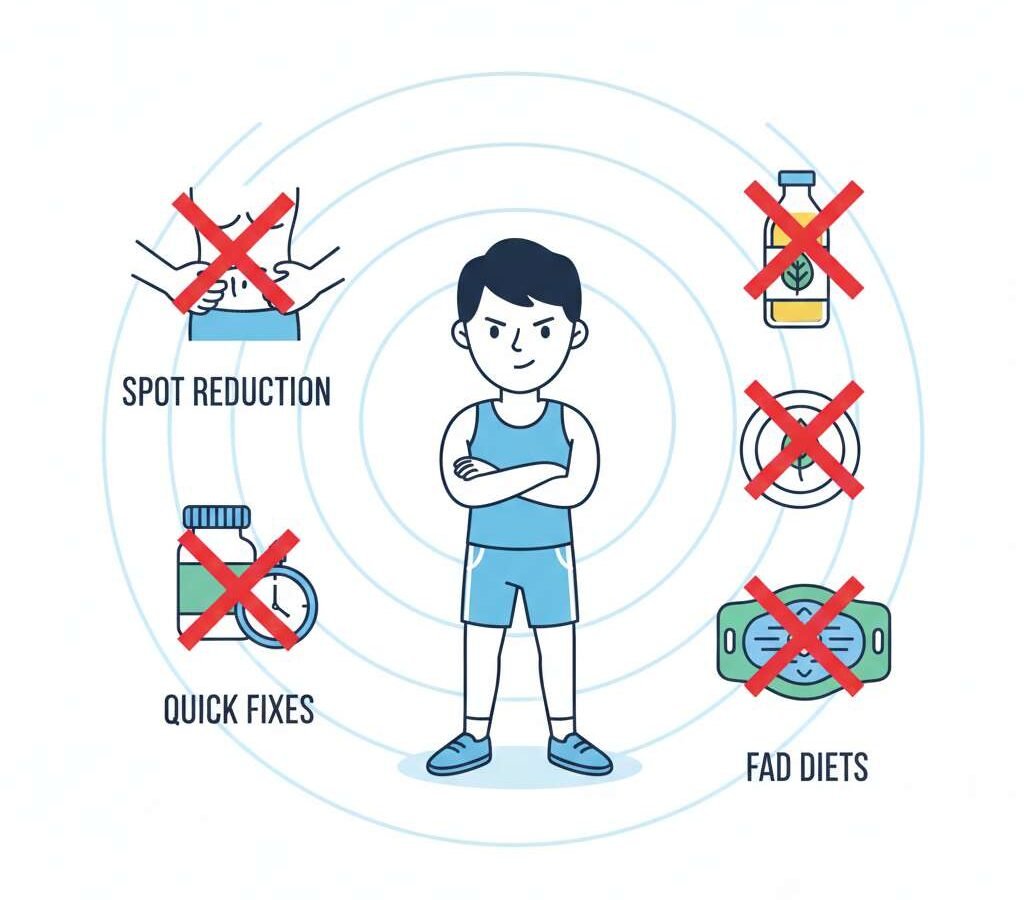
One common myth is that you can burn belly fat by doing exercises that target the stomach, like crunches or sit-ups. The truth is, fat loss occurs throughout the body. Core exercises strengthen and tone muscles but do not directly burn belly fat. Overall weight loss through diet and full-body exercise is necessary to reduce abdominal fat.
Quick Fixes and Fad Diets
Many people try quick fixes or fad diets promising fast belly fat loss. These often involve extreme calorie restrictions or the use of supplements. They may show temporary results, but are not sustainable. Losing belly fat takes consistent habits, including a balanced diet, regular exercise, and healthy lifestyle choices. Long-term changes provide better results than short-term, extreme methods.
Realistic Expectations and Tips
Losing belly fat takes time and consistent effort. It does not happen overnight. Understanding what to expect helps you stay motivated and avoid frustration. Small, steady changes in diet, exercise, and lifestyle lead to lasting results.
Timeline for Seeing Changes
Belly fat reduction varies by person. Factors like genetics, age, hormones, and starting weight affect how fast you see results. Some people notice changes in a few weeks, while for others it may take months. Consistency with calorie control, workouts, and healthy habits is key. Even small reductions in waist size can improve health and confidence.
Staying Consistent and Motivated
Tracking progress, setting realistic goals, and celebrating small achievements help you stay on track. Focus on habits you can maintain long-term, rather than quick fixes. Combining balanced meals, regular cardio, strength training, sleep, and stress management ensures the best results.
Realistic expectations and patience are essential. Belly fat loss is gradual, but steady habits create noticeable, lasting changes. With commitment, you can safely and effectively reduce abdominal fat and improve overall health.
Conclusion
Belly fat can go away with weight loss, but it takes time, consistency, and a balanced approach. Both subcutaneous fat and visceral fat shrink as you create a calorie deficit through healthy eating and regular exercise. Cardio, strength training, and core exercises help burn calories and tone the stomach area, while a nutrient-rich diet supports steady fat loss.
Lifestyle factors like sleep, stress management, and limiting alcohol or sugary drinks also play an important role. Quick fixes and fad diets may give temporary results, but are not sustainable. Steady, realistic habits lead to lasting change and improve overall health.
Remember, belly fat loss is gradual. Focusing on small, daily improvements in diet, movement, and lifestyle ensures safe and effective results. Over time, these changes reduce abdominal fat, boost energy, and improve overall well-being. Patience and consistency are the keys to achieving and maintaining a slimmer, healthier midsection.
FAQs About Belly Fat and Weight Loss
Many people have questions about losing belly fat. Understanding common concerns helps you follow a realistic and effective plan. Here are the most frequently asked questions with clear answers.
Does Belly Fat Disappear Faster Than Other Fat?
Belly fat, especially visceral fat, may decrease slightly faster than fat in other areas because it is more metabolically active. However, overall fat loss depends on diet, exercise, and lifestyle habits.
How Long Does It Take to Lose Belly Fat?
The timeline varies for everyone. Some notice changes in a few weeks, while others may need several months. Consistency in a calorie-controlled diet, regular exercise, and healthy habits ensures gradual and sustainable fat loss.
Can I Lose Belly Fat With Exercise Alone?
Exercise helps burn calories and strengthen muscles, but it is most effective when combined with a healthy diet. Core exercises tone muscles, but cannot remove fat from the stomach alone.
Are There Quick Fixes for Belly Fat?
No method can instantly eliminate belly fat. Fad diets, supplements, or extreme routines may give temporary results, but lasting fat loss requires steady, consistent habits.
How Do Lifestyle Factors Affect Belly Fat?
Sleep, stress, alcohol, and sugary drinks all influence belly fat. Managing these factors along with diet and exercise improves results and overall health.
