


Are oranges good for belly fat loss? Many people ask this while trying to lose weight. Yes, oranges are good for belly fat loss when eaten in moderation. One medium orange has low calories and high water content. It fills you up fast.
The fiber in oranges slows digestion and helps control hunger. Natural sugar in oranges is lower than that in many packaged snacks. Vitamin C in oranges supports metabolism and fat loss. Oranges fit well in a weight-loss diet and a calorie-deficient plan. They work better as whole fruit rather than juice. Eating oranges at the right time helps maintain steady blood sugar levels and supports digestive health.
What Makes Belly Fat Hard to Lose
Belly fat is not just about looks. It is linked to daily habits, food choices, and how the body stores energy. Many people eat less but still see no change in their waistlines. That happens because belly fat behaves differently from fat in other areas. It reacts strongly to sugar intake, stress, and poor sleep. To lose it, you must understand how it works inside the body.
Difference Between Belly Fat and Body Fat
Not all fat is the same. Belly fat sits deeper in the body. It wraps around internal organs. This type of fat responds fast to blood sugar levels and hormone changes. That is why weight loss can feel slow even with a calorie deficit. Foods with high natural sugar, low fiber, or liquid calories raise belly fat faster. Whole fruits like oranges help more because of their fiber and water content. They support digestive health and keep hunger under control.
Role of Calories and Insulin Levels
Calories matter, but insulin plays a significant role as well. When blood sugar rises often, the body stores more belly fat. Packaged snacks and sugary drinks cause quick spikes in blood sugar. Whole foods slow this process. Fiber in oranges slows digestion and supports stable blood sugar levels. This helps reduce fat storage over time. A weight-loss diet works better when meals keep insulin levels steady. That is why timing, portion size, and food quality matter. Belly fat reduction becomes easier when the body stays balanced and full longer.
Nutritional Value of Oranges
Oranges are simple, fresh, and easy to eat. They fit nicely into a weight-loss diet because they are low in calories and rich in nutrients. Many people worry about fruit sugar. With oranges, the balance of fiber, water, and vitamins makes a real difference. This is why oranges often support belly fat reduction when eaten the right way.
Calories in One Orange
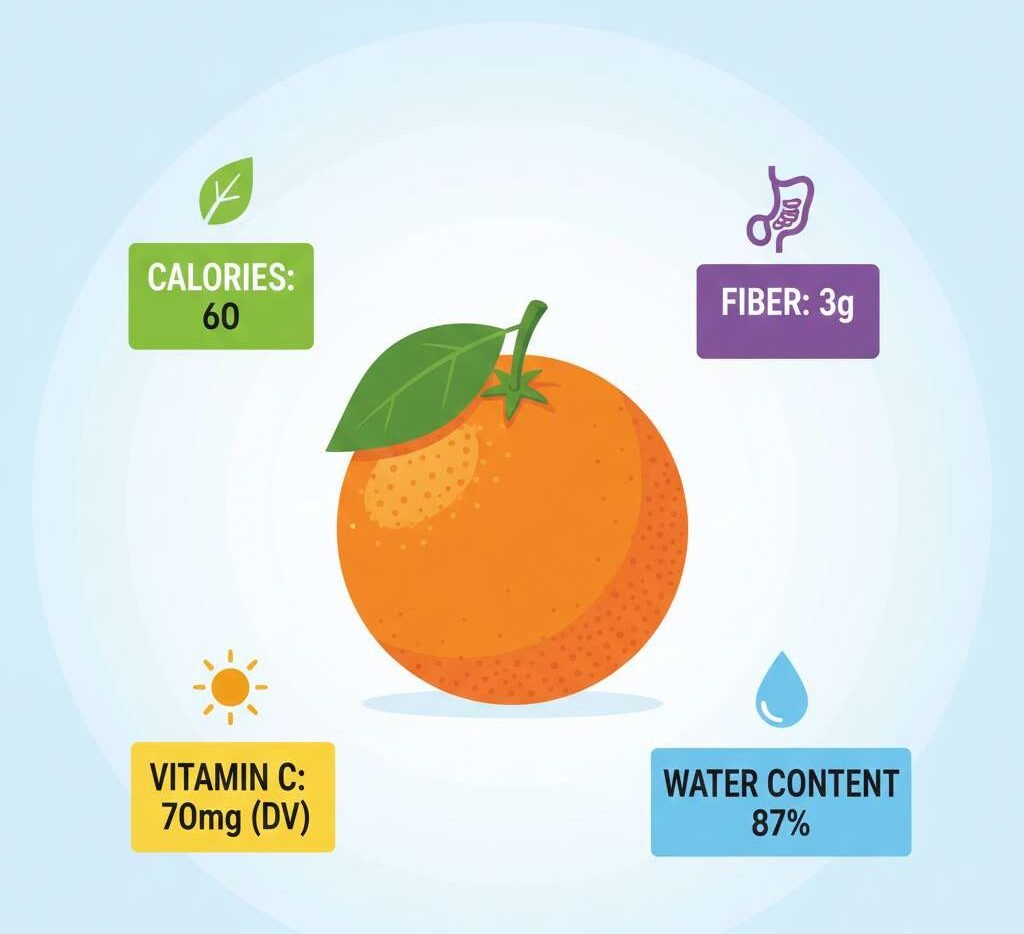
One medium orange has about 60-70 calories. That is low compared to most snacks. It gives volume without a heavy energy load. This helps people stay within a calorie deficit. Low-calorie fruits like oranges work well for daily meals. They reduce the urge to snack on processed food. This supports steady weight loss over time.
Fiber, Vitamin C, and Water Content
Fiber in oranges plays a key role. It slows digestion and keeps you full longer. This helps control hunger and portion size. Oranges also have high water content. This adds bulk to meals without extra calories. Vitamin C in oranges supports metabolism and fat loss. It also helps the body handle stress, which links to belly fat storage. Together, fiber and water support digestive health and better food control.
Natural Sugar in Oranges
Natural sugar in oranges differs from added sugar. It comes with fiber, vitamins, and water. This slows the rise in blood sugar levels. The insulin response stays more stable. That matters for belly fat reduction. Whole oranges work far better than juice. Juice removes fiber and raises blood sugar levels quickly. For fat loss, whole fruit is the more intelligent choice.
Are Oranges Good for Belly Fat Loss?
Many people worry that fruit stops fat loss. That fear often comes from sugar myths. Oranges work differently. They support belly fat reduction because they are low in calories and rich in fiber. They help control hunger and reduce poor snacking. This makes it easier to stay in a calorie deficit.
How Fiber Helps Control Hunger
Fiber in oranges slows digestion. Food stays in the stomach longer. This helps you feel full. Fewer cravings follow. That matters for weight loss diet plans. Fiber also supports digestive health. Better digestion helps reduce bloating around the waist. Whole oranges work best here. Juice removes fiber, weakening this effect.
Effect on Digestion and Bloating
Oranges contain water and fiber together. This supports regular digestion. Many people confuse bloating with belly fat. When digestion improves, the stomach looks flatter. Stable blood sugar levels also help. Sudden sugar spikes cause water retention and fat storage. Oranges help avoid that problem when eaten in normal portions.
Oranges vs Processed Sugary Snacks
Processed snacks raise blood sugar fast. They increase insulin response. That leads to fat storage around the belly. Oranges behave differently. Natural sugar in oranges comes with fiber and water content. This slows sugar release. The body uses energy instead of storing it. Low-calorie fruits like oranges help replace cookies or candy. This simple swap supports steady, long-term fat loss.
Can Oranges Slow Down Fat Loss?
Oranges help many people lose weight, but problems start when portions grow too large or habits slip. Fruit is healthy, yet balance still matters. Eating oranges the wrong way can slow belly fat reduction. This section explains where people go wrong and how to avoid it.
Eating Too Many Oranges
Even low-calorie fruits add up. Eating several oranges at once increases calorie intake. Natural sugar in oranges can still affect blood sugar levels when consumed in excess. This may slow weight loss. One to two oranges per day works well for most people. That amount supports fiber intake without pushing calories too high. Portion control helps maintain a calorie deficit and supports steady fat loss.
Juice vs Whole Oranges
Orange juice causes more problems than whole fruit. Juice removes fiber and keeps sugar. This leads to fast sugar absorption. Blood sugar rises quickly. Insulin response increases. That encourages belly fat storage. Whole oranges slow digestion and help control hunger. Chewing also signals fullness to the brain. For belly fat reduction, whole fruit always works better than juice.
Best Portion Size Per Day
A good portion is one medium orange or two small ones. Eat them as snacks or with meals. Pairing oranges with protein helps control blood sugar. This keeps energy stable and reduces cravings later. Timing also matters. Eating oranges earlier in the day often works better than late at night. Small choices like these protect weight loss progress and support long-term results.
Best Time to Eat Oranges for Fat Loss
Timing can affect how the body uses the nutrients in oranges. Eating oranges at the right time helps control hunger, support digestion, and maintain stable blood sugar. This can make belly fat reduction easier. Oranges are flexible and fit into many parts of a daily diet, but some timing strategies work better than others.

Morning vs Evening Intake
Eating oranges in the morning can boost metabolism. They provide fiber and water to start the day complete and satisfied. Morning intake also helps prevent mid-morning snacking on processed foods. Eating oranges late at night may not be ideal. Natural sugar and water can cause slight bloating for some people. Choosing the right time ensures oranges support belly fat reduction without disrupting sleep or digestion.
Eating Oranges Before Workouts
Oranges before a workout are helpful. The natural sugar provides quick energy. Fiber and water prevent sudden spikes in blood sugar. This combination helps maintain stamina without feeling heavy. A small orange 30–60 minutes before exercise works well. It keeps insulin levels steady and reduces unnecessary fat storage.
Pairing Oranges With Protein
Pairing oranges with protein supports fat loss. Protein slows digestion even further. This keeps blood sugar stable. Combining a boiled egg, yogurt, or nuts with an orange makes a filling snack. It reduces cravings and supports calorie control. This simple habit improves digestive health and helps reduce belly fat over time.
Oranges Compared to Other Fruits for Belly Fat
Not all fruits affect belly fat the same way. Oranges are low in calories, high in fiber, and full of water, making them a wise choice. Comparing them to other fruits helps understand why they often support belly fat reduction better.
Oranges vs Apples
Apples also have fiber and water, but oranges contain slightly more vitamin C. Oranges tend to feel more refreshing and hydrating. Both fruits help control hunger, but oranges provide a faster sense of fullness for some people. Including either in a weight loss diet works well, but oranges can be easier to eat as a snack.
Oranges vs Bananas
Bananas are higher in calories and sugar. They provide more potassium and energy, but may not keep blood sugar as stable as oranges. For belly fat reduction, oranges’ lower calorie and higher water content make them more effective at controlling cravings and preventing fat storage. You can learn more about how bananas affect belly fat here.
Which Fruit Keeps You Full Longer
Fiber is key to fullness. Oranges contain soluble fiber, which slows digestion. This helps control hunger between meals. Pairing oranges with protein further extends satiety. Whole fruit always works better than juice, no matter which fruit you choose. For steady fat loss, oranges remain one of the top choices for snacks and meal additions.
Who Should Be Careful with Oranges
Oranges are healthy for most people, but some need to be careful. While they support belly fat reduction, certain conditions can make eating too many oranges uncomfortable or risky. Knowing these precautions helps keep health and weight loss on track.
People with Acid Reflux
Oranges are acidic. Eating too much can trigger heartburn or acid reflux in sensitive individuals. If you notice stomach discomfort after eating oranges, limit intake or eat them with other foods. Combining oranges with protein or low-fat meals can reduce irritation. Moderation is key to still benefiting from fiber and water content.
Blood Sugar Concerns
Natural sugar in oranges is healthier than added sugar, but it still raises blood sugar levels. People with diabetes or insulin resistance should monitor portion sizes. Eating one medium orange at a time, paired with protein or fat, helps maintain stable blood sugar levels. This reduces fat storage and supports safe belly fat reduction.
Oranges are generally safe and beneficial. For most, they help control hunger, improve digestion, and support a weight loss diet. By eating them thoughtfully and in moderation, even those with mild sensitivities can enjoy their benefits without slowing fat loss.
Final Verdict: Should You Eat Oranges for Belly Fat Loss?
Oranges can be a helpful part of a belly fat loss plan. They are low in calories, high in fiber, and full of water. These qualities help control hunger, support digestion, and reduce bloating. Eating whole oranges rather than juice helps slow sugar absorption and stabilize blood sugar levels.
Moderation is important. One medium orange or two small ones per day fits nicely into a weight-loss diet. Pairing oranges with protein or healthy snacks improves fullness and helps avoid unnecessary cravings. Timing also matters; morning or before a workout often works best for energy and fat control.
Compared to other fruits, oranges offer a balance of fiber, water, and vitamin C that makes them practical for reducing belly fat. People with acid reflux or blood sugar issues should watch portions, but most can enjoy them safely.
